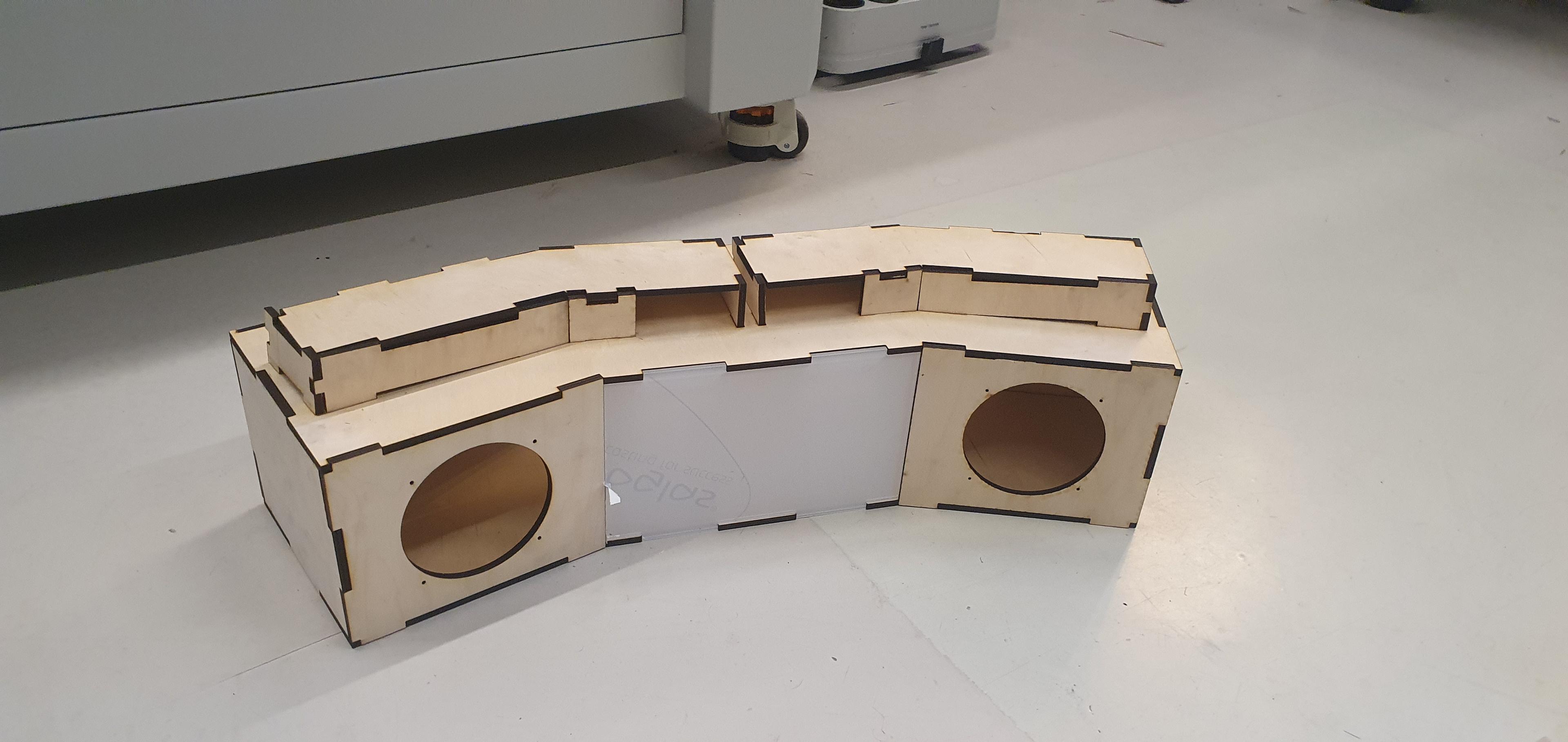
Portable Speaker V2
After completing my first custom portable speaker, I learned a lot about sound design, enclosure tuning, and component selection. This second version builds on the same basic design but incorporates every improvement I identified in version one.
The new speaker is significantly larger — increasing internal volume from 3.8 liters to approximately 20 liters. This fivefold increase allows for deeper bass response, more efficient airflow, and overall better acoustic performance.
One of the key upgrades was choosing and sourcing my own speaker drivers. I selected two matching drivers to ensure symmetry and increased output. I browsed several options from driver databases available online — you can view the one I used here.
To make an informed decision, I simulated three different drivers in WinISD, evaluating their performance against my design constraints. Based on the results, I chose the driver that offered the best balance between sound quality, efficiency, and enclosure compatibility.
Using the selected driver data, I calculated the optimal box size and port dimensions to match the frequency response goals. This allowed me to design a properly tuned system rather than relying on guesswork.
The enclosure is made from precision-cut wood panels, assembled with interlocking joints. The front panel includes two large drivers positioned symmetrically for stereo sound. In the center is a transparent acrylic window showcasing the internal electronics, including a custom battery pack, controller module, and power distribution. Internal LED lighting adds visibility and aesthetic appeal. The design also incorporates detachable shoulder straps for portability, making it easy to carry.
On the right side of the image, the full CAD model is shown with all major components represented. This includes vent placement, internal volume shaping, and structural supports—all modeled and iterated in Fusion 360 before any physical construction began.
This build is a major leap forward, combining practical experience from the first version with improved simulation, planning, and execution. The result is a far louder, more efficient, and better-looking portable sound system.
Gallery
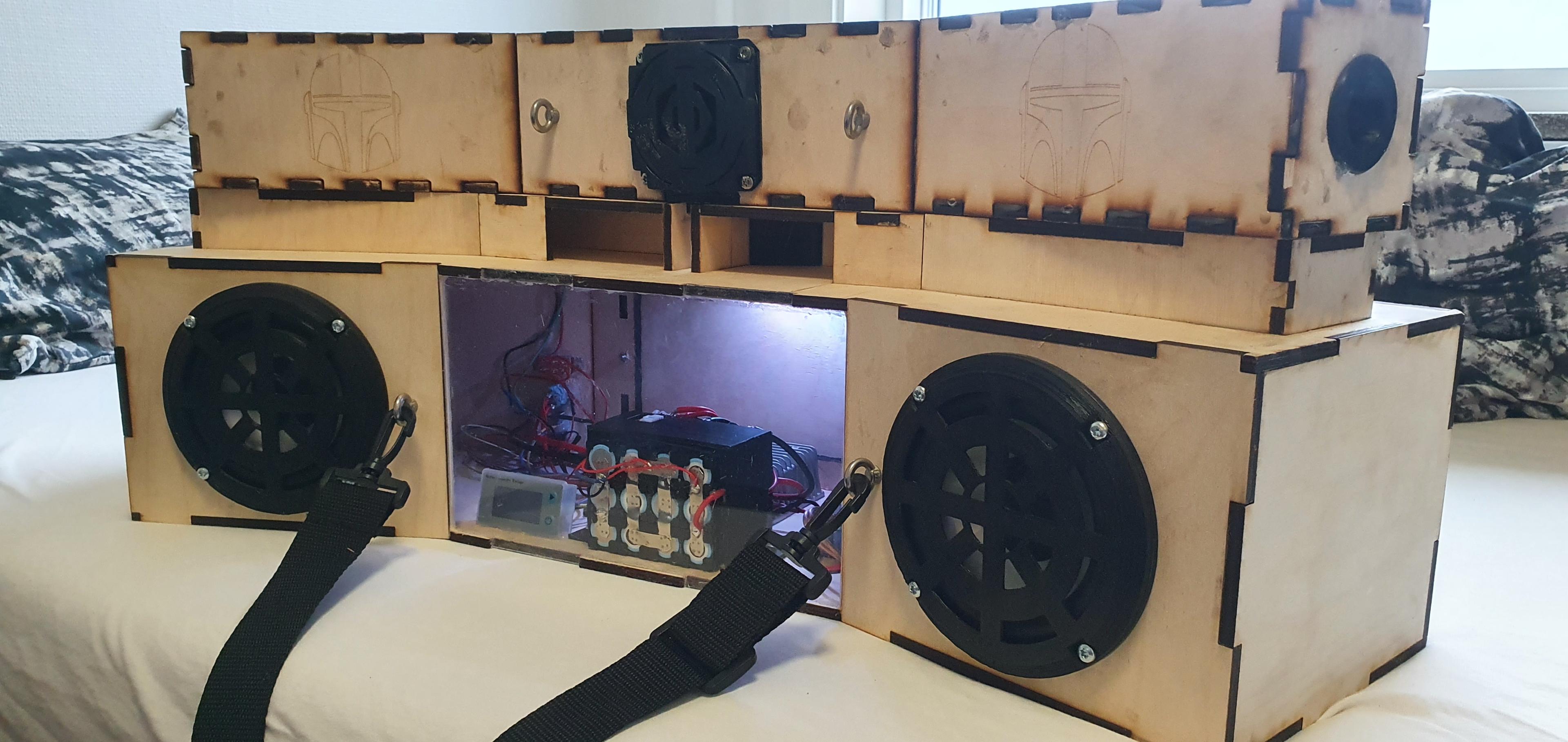
Front comparison of V1 VS V2
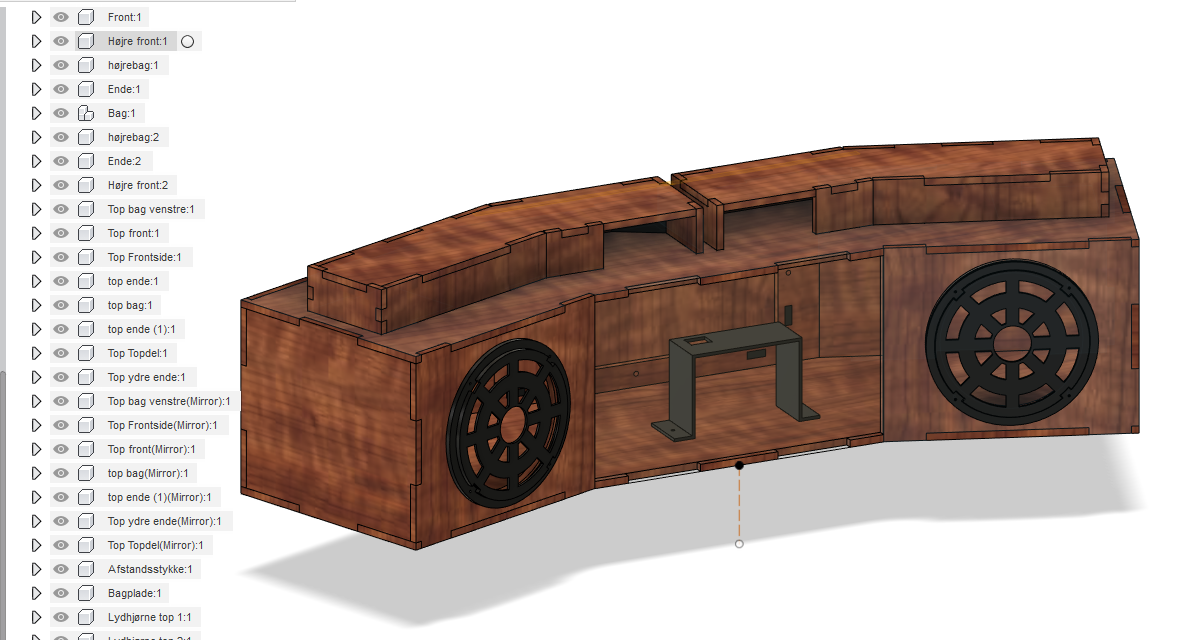
CAD design
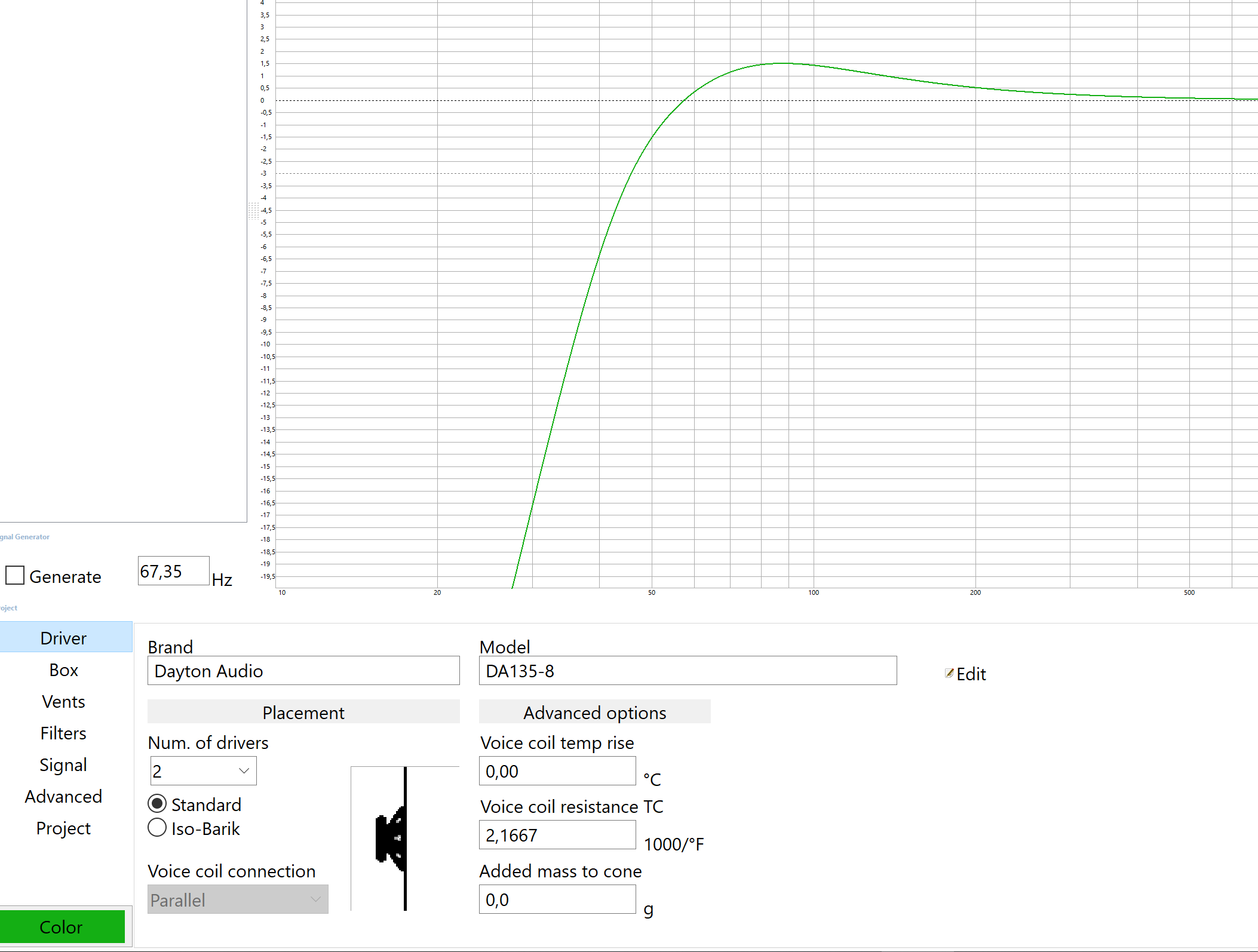
SPL simulation